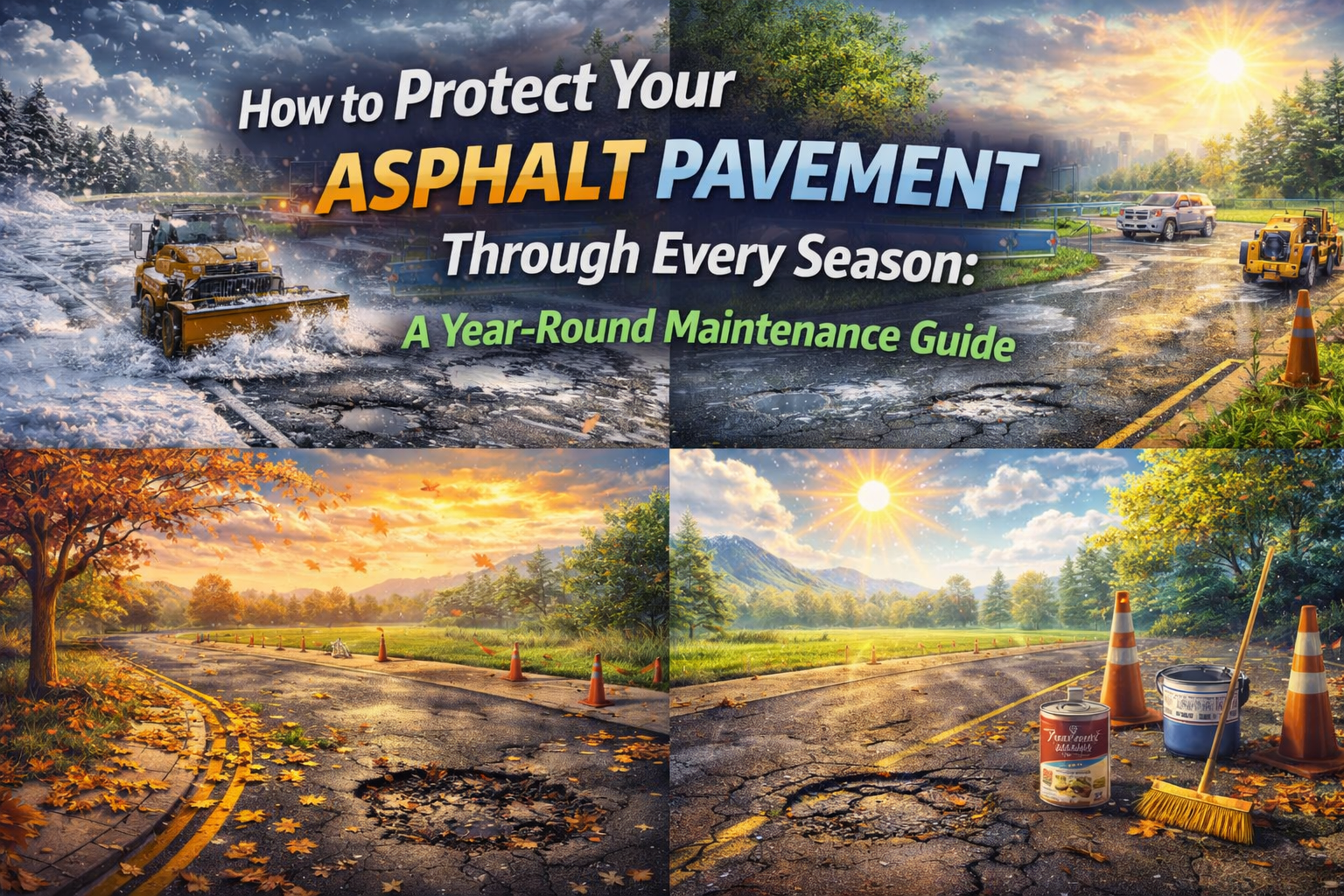
Asphalt pavement is one of the most durable and cost-effective surfacing options available, but it isn’t invincible. Temperature swings, moisture, UV exposure, and daily wear all take a toll over time. The difference between pavement that lasts 15 years and pavement that starts crumbling after five often comes down to one thing consistent seasonal maintenance.
Whether you manage a commercial parking lot, a residential driveway, or a municipal roadway, understanding what your pavement needs at each stage of the year can save you from expensive repairs down the line. Here’s a practical breakdown of how to keep your asphalt in top shape, season by season.
Spring: Assess the Damage and Get Ahead of It
Winter is the hardest season on asphalt. The freeze-thaw cycle where water seeps into small cracks, freezes, expands, and then thaws is one of the leading causes of pavement deterioration. By the time spring arrives, the damage is already done. Your job now is to find it before it spreads.
Start with a thorough visual inspection. Walk the entire surface and look for new cracks, potholes, areas of settling, and any spots where water tends to pool. Standing water is a red flag it means the drainage isn’t functioning properly, and that moisture is going to keep working its way into the base layer.
Once you’ve identified problem areas, prioritize crack sealing. Small cracks may not look like much, but they’re entry points for water and debris. Filling them early in the season prevents them from widening into something far more costly. For potholes or base failures, patching should happen as soon as temperatures are consistently warm enough for the material to cure properly.
Spring is also the ideal time to clean the surface. Remove sand, salt, gravel, and any debris left over from winter treatments. These materials can trap moisture against the surface and accelerate oxidation. A good power washing goes a long way toward extending the life of your pavement.
Summer: Protect and Preserve
With warmer temperatures and longer dry stretches, summer is your window for preventive treatments. If your pavement hasn’t been sealcoated in the last two to three years, this is the season to schedule it. Sealcoating acts as a protective barrier against UV rays, oil spills, and water penetration. It also restores the dark, clean appearance that makes any property look well-maintained.
Timing matters with sealcoating. The surface temperature needs to be at least 50°F, and you’ll want a dry forecast for at least 24 to 48 hours after application. Most contractors recommend scheduling this work in late spring through early fall for the best results.
Summer is also when you should pay attention to drainage. Heavy summer storms can expose weaknesses in your grading. If water is collecting in certain areas rather than flowing to drains or off the edges, that’s a problem that needs to be corrected before fall.
Fall: Prepare for the Worst
Fall maintenance is all about damage prevention. Everything you do now is designed to minimize what winter can do to your pavement.
Start by completing any remaining crack sealing or patching that didn’t get done in the spring or summer. Any open crack going into winter is going to get worse that’s not a possibility, it’s a certainty. The freeze-thaw cycle doesn’t skip anything.
Clean out all drains, catch basins, and gutters surrounding your paved areas. Leaves, dirt, and debris can clog these systems quickly, leading to water backup that sits on or near the pavement surface. Proper drainage heading into winter is one of the most overlooked and most impactful steps you can take.
If your pavement is in a region that uses salt or chemical deicers, consider discussing application strategies with your maintenance provider. Overuse of certain chemicals can actually damage asphalt over time. A balanced approach using the right products at the right volume protects both the surface and the environment.
Winter: Monitor and Respond
Winter is a reactive season. There isn’t much preventive work you can do while temperatures are below freezing, but you can still stay on top of things.
Keep the surface clear of snow and ice as much as possible. The longer moisture sits on the pavement, the more opportunity it has to penetrate. When plowing, make sure blades are set to the correct height dragging a blade directly on the asphalt surface can gouge and scar it, creating new entry points for water.
Mark any new cracks or potholes that develop so you can address them as soon as spring arrives. Keeping a simple log of winter damage makes your spring maintenance plan far more efficient.
The Bigger Picture
Seasonal maintenance isn’t complicated, but it does require consistency. The property owners who get the most life out of their pavement are the ones who treat it as an ongoing responsibility rather than a one-time installation.
If you’re unsure where your pavement stands or what it needs heading into the next season, connecting with an experienced paving professional is the smartest first step. A quick assessment can tell you exactly what’s urgent, what can wait, and what a long-term maintenance schedule should look like. You can Contact Conte Paving & Construction Avoca to discuss your pavement’s current condition and get expert guidance on keeping it in great shape year-round.
Pavement that’s maintained properly doesn’t just last longer it looks better, performs better, and protects the value of the property it sits on. A little effort each season goes a long way.